Serving Fremont, CA and surrounding areas. (341) 201-0466
Turn your vision into a permitted, year-round living space with custom sunroom design that addresses Fremont's seismic requirements, HOA guidelines, and your family's unique needs.
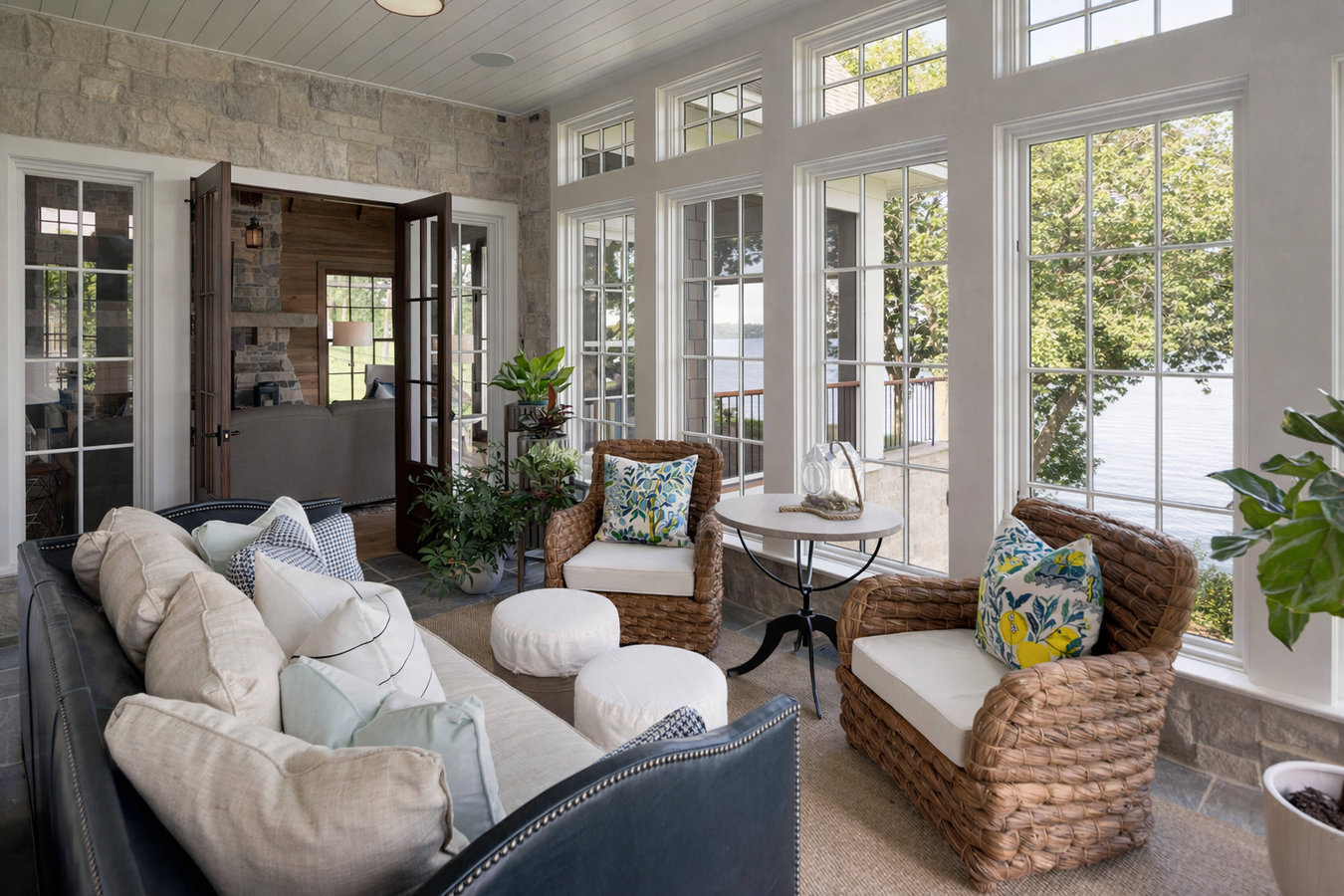
Sunroom design in Fremont CA means creating a detailed plan for a glass-enclosed room addition that works with your home's architecture, meets city permit requirements, and addresses the Hayward Fault's seismic engineering standards — most projects involve 2–4 weeks of design work before construction can begin.
If you've been imagining what a sunroom could look like on the back of your Fremont home but aren't sure where to start, design is the first real step. It's where you figure out the room's size, how it connects to your existing layout, what type of glass makes sense for your neighborhood's sun exposure, and how the whole thing gets permitted through the city. Whether you live in the Mission San Jose hills where afternoon sun is intense, or closer to the bay where morning fog is a regular visitor, your sunroom design needs to account for those conditions.
Good design also means understanding how vinyl sunrooms differ from aluminum-framed options, and what seismic anchoring looks like when your home sits near one of California's most active earthquake faults.
If you have outdoor space that rarely gets used because the afternoon wind off the Bay makes it uncomfortable, or the morning fog keeps it cold and damp, a sunroom can turn that dead zone into a room you actually sit in. The difference between a patio you avoid and a sunroom you reach for every morning is often just glass, insulation, and a good design.
Fremont's older ranch-style homes from the 1960s and 1970s often have small windows and closed floor plans that don't let in much natural light. If your living room feels dim even on a bright day, a well-designed sunroom addition can open up the back of your home and flood it with light without sacrificing energy efficiency.
Many Fremont neighborhoods — particularly in Mission San Jose, Warm Springs, and Ardenwood — have homeowners associations with design review requirements. If you're worried about getting HOA approval or don't know what restrictions apply to your property, professional design help means submitting a plan that meets their guidelines the first time.
If your family has grown and you need more usable living space, but a traditional home addition feels like too big a project, a sunroom is one of the more affordable ways to add a real room. Design work helps you figure out the right size, layout, and connection to your existing home so the space actually works for your family.
Our sunroom design work in Fremont starts with understanding how you want to use the room — is it a home office that needs to stay cool on hot afternoons, a reading nook where you want morning light, or a dining space that connects to your kitchen? From there, we measure your existing home, assess the foundation and attachment points, and create a detailed design that addresses seismic anchoring, glass selection, and how the room integrates with your home's roofline and exterior style.
We also handle the permit-ready drawings that the City of Fremont's Building Division requires, and if your neighborhood has an HOA, we help you navigate their design review process. Whether you're interested in vinyl sunrooms for low maintenance or custom sunrooms that match your home's unique architecture, the design phase is where those decisions get locked in.
Ideal for homeowners who want a room designed around a specific use or who need the sunroom to fit into an unusual lot shape.
Best for families who want to understand the comfort and energy trade-offs between different glass types and frame materials.
Required for anyone building in Fremont — includes seismic connection details and structural plans reviewed by a licensed engineer.
Critical for homeowners in planned communities where exterior additions require architectural committee approval before permits.
Fremont's proximity to the Hayward Fault means every sunroom addition requires engineered seismic connections that meet California's earthquake safety standards. A good design addresses how the new room attaches to your existing home's foundation and framing so the two structures move together during ground movement — not apart. This isn't optional or a recommendation. It's a code requirement that a city inspector will verify during construction, and it's where professional design work protects you from both structural failure and permit rejection.
Fremont's neighborhoods also vary widely in sun exposure and microclimate — homes in the hills near Mission San Jose get more direct afternoon sun and less fog than properties closer to the bay in Newark or Union City. That variation affects glass selection, ventilation design, and whether a three-season or four-season room makes more sense for your specific location. Design is where those local factors get translated into a room that actually works in your yard, not just on paper.
We start with a phone conversation to understand what you're looking for, then schedule a visit to your home to measure the space and look at how your house is built. We reply to all inquiries within one business day.
After the site visit, we put together a preliminary design with floor plan options, glass choices, and a written cost estimate. You review it, we adjust based on your feedback, and we finalize the design once you're comfortable with it.
Once the design is approved, we create the engineered drawings that Fremont's Building Division requires — including seismic connection details and structural plans reviewed by a licensed engineer. This step typically takes one to two weeks.
We submit the completed design to the city and, if your neighborhood has an HOA, to your architectural review committee. You receive copies of everything we submit, and we keep you updated on approval timelines throughout the process.
We handle permits, HOA approvals, and seismic engineering — you focus on what you want the room to feel like.
(341) 201-0466We design every sunroom with the Hayward Fault in mind — which means engineered connections between your new room and your existing home that meet California's earthquake safety standards. A city inspector verifies this work during construction, so you know it's done right.
Our design drawings are submitted directly to the City of Fremont's Building Division with all the details they require — structural plans, energy calculations, and seismic engineering. That means fewer correction requests and a smoother path to approval, which saves you time.
We've worked with architectural review committees in Mission San Jose, Warm Springs, and Ardenwood — which means we know what those HOAs typically require and how to submit a design that meets their guidelines. That experience helps you avoid delays and redesigns halfway through the process.
We hold an active California contractor's license, which you can verify yourself on the CSLB website in about 30 seconds. That license means we've passed the state's background and competency requirements — and it gives you a path to recourse if something goes wrong.
We've been designing and building sunrooms in Fremont long enough to know which glass performs well in the afternoon sun and which neighborhoods require extra attention during HOA review. That local knowledge shows up in the details of every design we deliver.
Permit timelines in Fremont can run six to eight weeks — the sooner you start the design, the sooner you're enjoying your new room.